




If your production line is running steel dies and constantly dealing with replacement schedules, or you're evaluating whether Tungsten Carbide Dies are worth the higher upfront cost, the answer depends entirely on your production volume, material, and budget — not on which one is "better" in general.
As a manufacturer producing both Tungsten Carbide and steel dies for cold heading, wire drawing, and stamping applications, we walk through this exact question with customers regularly. Here's how to think it through.
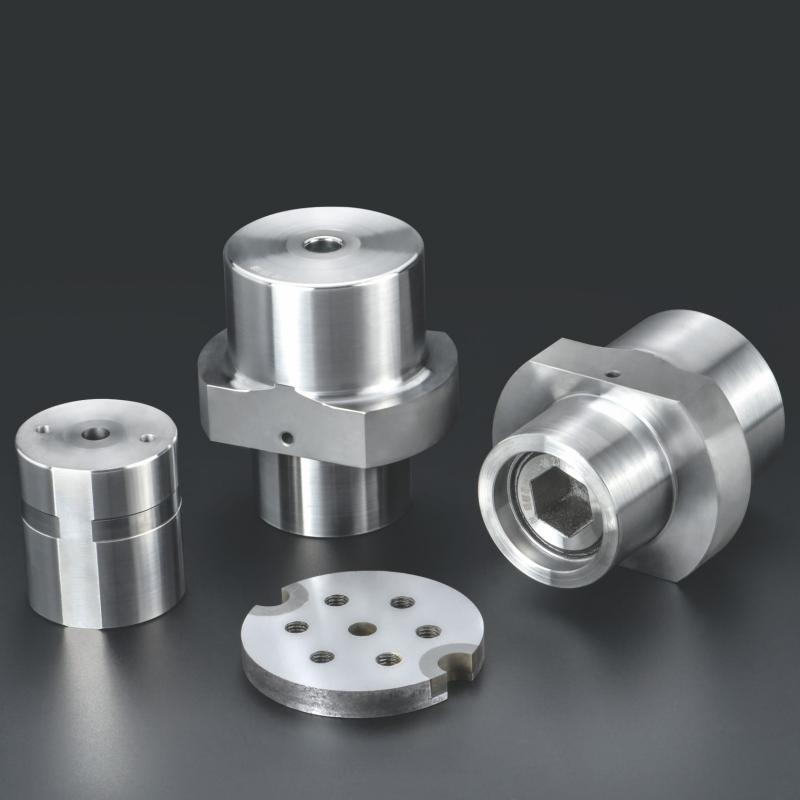
1. What Are Steel Dies?
Steel dies are forming tools made from tool steel or alloy steel, often heat-treated or surface-coated (such as PVD or nitride coating) to improve hardness and wear resistance. They're the traditional, widely used option across cold heading, stamping, and general metal forming.
Lower upfront cost per die
Easier and faster to machine, which shortens lead time for custom orders
Well suited to low-to-medium production volumes
Shorter service life under high-stress or abrasive conditions compared to carbide
2. What Are Tungsten Carbide Dies?
Tungsten Carbide Dies are made from a sintered composite of Tungsten Carbide and cobalt binder, offering a hardness of roughly 89–93 HRA — significantly harder than tool steel. This is the material behind our Carbide Drawing Dies and Tungsten Carbide Drawing Dies product lines.
Extended service life — often up to 10 times longer than steel dies under comparable conditions
Maintains dimensional accuracy and tight tolerances over long production runs
Higher resistance to abrasion, heat, and deformation under repeated impact
Higher upfront cost and more brittle, requiring careful handling to avoid chipping or cracking
3. Side-by-Side Comparison
Hardness and wear resistance: tungsten carbide is significantly harder; steel wears faster under high-volume or abrasive conditions
Service life: carbide dies typically last far longer, reducing replacement frequency
Upfront cost: steel dies are cheaper to produce; carbide dies cost more per unit due to material and processing
Brittleness: carbide is harder but more brittle and can chip or crack under sudden impact; steel is more forgiving of handling errors
Lead time: steel dies are generally faster to machine and deliver; carbide requires sintering and precision grinding, which takes longer
Best-fit volume: steel suits lower-volume or prototype runs; carbide suits high-volume, long-duration production
4. When Steel Dies Make More Sense
Lower production volumes where die replacement cost is a smaller factor than upfront tooling cost
Prototype or short-run production where designs may still change
Applications working with softer materials that don't heavily abrade the die surface
Budget-constrained projects where minimizing initial tooling investment matters most
5. When Tungsten Carbide Dies Make More Sense
High-volume, continuous production runs (automotive fasteners, mass-produced wire and rod)
Applications forming hard or abrasive materials, such as stainless steel or alloy wire
Processes demanding tight dimensional tolerances over the full production run — wire drawing, cold heading, nut and thread forming
Operations where downtime for die replacement is costly and should be minimized
Not sure which material fits your production volume and material type? Send us your part drawing and expected run size, and we'll recommend the right die material within 24 hours.
6. Cost Over the Life of the Die
Comparing sticker price alone is misleading. A steel die costs less upfront but may need replacing several times over the same production period a single carbide die would cover. For high-volume operations, the extended service life of tungsten carbide dies usually offsets the higher initial cost through fewer replacements and less production downtime. For lower-volume runs, that math often favors steel, since the die may never wear out before the run ends anyway.
7. Why Choose Us as Your Die Manufacturer
27 years of experience manufacturing both steel and tungsten carbide dies for cold heading, wire drawing, and stamping
ISO 9001:2015 certified quality system with mould precision up to 0.002mm
Material recommendations based on your specific volume, material, and budget — not a one-size-fits-all answer
Custom design and OEM/ODM support from drawing to finished die
There's no universal answer to steel dies vs tungsten carbide dies — the right choice depends on your production volume, the material you're forming, and how much downtime a die replacement actually costs you. If you're not sure which fits your application, send us your part specs and run volume and we'll help you figure out the right die material and design.