




Sourcing dies for medical device component manufacturing — surgical wire, implant components, dental instruments, suture wire, and similar precision parts — requires a different level of scrutiny than general industrial tooling, because a dimensional defect here isn't just scrap, it's a patient safety risk. Before ordering, confirm four things: whether the manufacturer can hold micron-level tolerance consistently across a production run, which certifications they actually hold versus which apply specifically to your part, whether they can supply the full set of precision components a cold heading line needs beyond just the die itself, and how they document quality on each batch you receive.
Why Medical Component Manufacturing Demands Tighter Die Precision
Dies used for medical wire drawing and component production are applied to applications including surgical wire, medical cable manufacturing, orthopedic implant components, dental instrument manufacturing, suture wire formation, medical sensor components, and medical micro-spring production. In most of these applications, a dimensional deviation in the die shows up directly as a dimensional deviation in the finished component — and for implantable or surgical parts, that deviation can be the difference between a part that passes qualification and one that doesn't. This is why tolerance consistency, not just a single good sample, matters more here than in general industrial tooling.
Carbide Drawing Dies: Material Options for Medical-Grade Wire and Component Production
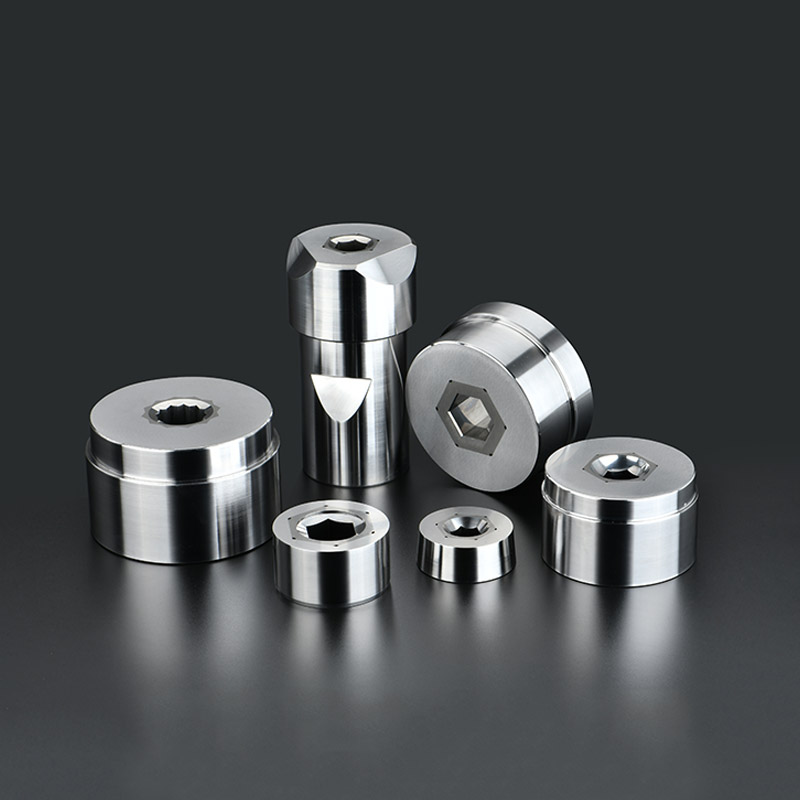
Carbide drawing dies for this application — sometimes referred to as Tungsten Carbide wire drawing dies when used specifically for wire reduction — are typically made from Tungsten Carbide (WC) mixed with cobalt powder and pressed and sintered, available in grades such as KG5, KG6, EA65, EA90, ST6, ST7, VA80, VA90, and VA95, often paired with steel casings like H13, SKD11, or SKD61. As a reference point, a grade like KG5 typically runs around 88% Tungsten Carbide and 12% cobalt with a hardness around HRA 88.3, while steel casings such as SKD11 (HRC 58–61) are common for cold extrusion applications and H13 (HRC 59–61) for hot work. The right grade depends on the wire or component material you're drawing and the production volume — ask your supplier to match grade to your specific application rather than defaulting to a single standard offering.
Certifications to Ask About Beyond General Quality Management
A general quality management certification like ISO 9001:2015 confirms a manufacturer has a documented process — it's worth asking for, and it's a reasonable baseline. It does not, on its own, confirm FDA registration, biocompatibility testing, or medical device-specific compliance for the die material itself. If your finished product requires traceability to specific medical device manufacturing standards, ask your die supplier directly which certifications they hold and which apply to the specific die grade you're ordering, rather than assuming a general quality certification covers medical-specific requirements. This is a distinction worth getting in writing before a bulk order, not after.
Precision Components Beyond the Die Itself
A cold heading line producing medical components needs more than just the forming die to hold tolerance. A transfer finger — the component that moves metal blanks from one die cavity to the next in a multi-die header — has to maintain the same positioning precision as the dies themselves, since misalignment here introduces defects before the part even reaches its final forming station. Fastening washers and other supporting components carry the same tolerance requirements. When qualifying a supplier for medical component tooling, ask whether they manufacture these supporting precision components in-house to the same tolerance standard as the dies, or whether that's sourced separately — a mismatch between die precision and transfer component precision is a common, underappreciated source of defects in high-precision production.
Questions to Ask a Medical Component Die Supplier
What tolerance can they guarantee consistently across a full production batch, not just a first-article sample?
Which certifications do they hold, and do any apply specifically to medical device component manufacturing versus general industrial quality management?
Can they supply transfer fingers, fastening washers, and other supporting precision components to the same tolerance as the dies?
What documentation do they provide per batch — material certificates, dimensional inspection reports, or similar traceability records?
Do they have prior experience supplying dies for your specific application — surgical wire, implant components, dental instruments, or similar?
If you have drawings or a sample ready, send them directly for a quote — for a broader look at die material selection and manufacturer evaluation criteria that apply across applications, see our forging die manufacturer guide.
Frequently Asked Questions
What tolerance is needed for dies used in medical wire drawing?
Precision carbide drawing dies for medical applications commonly hold tolerances around ±0.002mm, though the exact requirement depends on the specific wire diameter and application. Always confirm the guaranteed tolerance for your specific part rather than relying on a general capability statement.
Does ISO 9001 certification mean a die is approved for medical device use?
Not on its own. ISO 9001:2015 confirms a documented quality management process, but it doesn't by itself confirm FDA registration or biocompatibility testing for the die material. Ask your supplier directly which certifications apply to the specific product you're sourcing.
What is a transfer finger and why does it matter for medical component production?
A transfer finger moves metal blanks between die cavities in a multi-die header cold heading machine, maintaining positioning and orientation during the process. If it doesn't hold the same precision as the forming dies, it can introduce defects before the part reaches its final station — which matters more in medical component production where dimensional accuracy is critical.
What materials are used for medical-grade drawing dies?
Tungsten carbide grades such as KG5, KG6, EA65, EA90, ST6, ST7, VA80, VA90, and VA95 are common for the drawing surface, often paired with steel casings like H13, SKD11, or SKD61. The right combination depends on the material being drawn and the production volume.