



If you're replacing dies more often than your production schedule allows, the die material alone might not be the problem — the surface might be. A TiN Coated Die tackles wear from the outside in, and for high-volume Cold Heading operations, that surface layer often makes a bigger difference than most buyers expect.
As a manufacturer producing both coated and uncoated dies for cold heading, punching, and forging applications, here's what the TiN coating actually changes — and where it's worth the added cost.
1. What Is TiN Coating and How Does It Work?
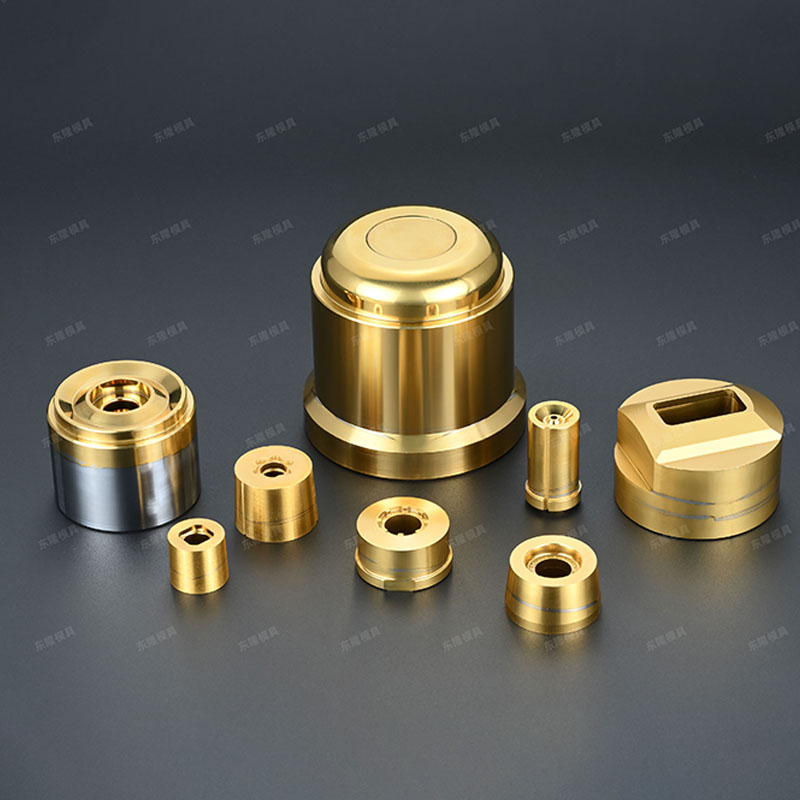
TiN (Titanium Nitride) coating is a thin, hard surface layer applied through PVD (Physical Vapor Deposition) — a vacuum-based process that deposits titanium nitride onto the die surface without changing its core dimensions. Rather than replacing the base material, the coating sits on top of it, creating a harder, lower-friction surface that takes the brunt of wear before it reaches the die itself.
2. Why Uncoated Dies Wear Out Faster
Every time a die contacts a workpiece, friction and repeated mechanical stress gradually erode the surface. On uncoated dies, this shows up as abrasion, material buildup, and eventually dimensional drift — the die stops holding the tolerances it was ground to. In high-speed cold heading, where a single die can cycle tens of thousands of times, this wear accumulates fast.
3. How TiN Coating Extends Die Life
Improved wear resistance: the hard TiN layer resists abrasion far better than bare tool steel or carbide, so the die holds its shape through more production cycles
Reduced friction: the coating's low-friction surface reduces material adhesion and buildup, which is often what causes surface damage and inconsistent part quality over time
Better dimensional stability: because the die wears more slowly and more evenly, it holds tight tolerances for longer stretches of continuous production
Lower replacement frequency: extending the interval between die changes directly reduces both tooling spend and production downtime
4. Which Dies Benefit Most From TiN Coating
TiN coating isn't a separate product line — it's an upgrade option applied to the dies you're already sourcing:
Cold Heading Dies: repeated impact loading in bolt, screw, and fastener production makes wear resistance especially valuable here
Punch Dies: punching and precision stamping applications benefit from the reduced chipping and deformation resistance the coating provides
Carbide Dies: combining carbide's inherent hardness with a TiN surface layer pushes wear resistance and service life even further
Forging Dies: both hot and cold forging processes see reduced die wear from repeated mechanical stress
Not sure whether the coating upgrade makes sense for your production volume? Send us your part specs and expected run size, and we'll tell you whether TiN coating pays for itself within 24 hours.
5. Is the Coating Upgrade Worth It?
TiN coating adds cost to the base die price, so it's not automatically the right call for every job. It tends to pay off fastest in high-volume, continuous production where die replacement frequency is already a real cost — the coating reduces how often you're swapping dies, which offsets the upfront premium over time. For low-volume or short-run jobs, the die may never wear out fast enough for the coating to matter, similar to how the choice between Steel Dies and Tungsten Carbide dies comes down to production volume rather than which material is "better."
6. Our TiN Coating Process
Every coated die goes through surface cleaning and preparation, vacuum treatment, PVD TiN deposition, and a final quality inspection to confirm coating adhesion and performance before shipment. This ensures the coating bonds properly and delivers the wear resistance it's meant to provide, rather than flaking or wearing unevenly under production stress.
7. Why Choose Us for TiN Coated Dies
27 years of experience manufacturing precision dies for cold heading, punching, and forging
ISO 9001:2015 certified quality system with mould precision up to 0.002mm
Advanced PVD TiN coating technology applied to cold heading, punch, forging, and Carbide Dies
Custom coated die solutions based on your drawings, materials, and production volume
If your dies are wearing out faster than your production schedule can absorb, a TiN coating upgrade is one of the more cost-effective ways to close that gap — without switching materials entirely. Send us your die specifications and run volume, and we'll help you figure out whether the coating makes sense for your application.