




As a manufacturer producing custom Punch Dies for automotive, electronics, appliance, and metal fabrication applications, here's how we walk customers through this decision.
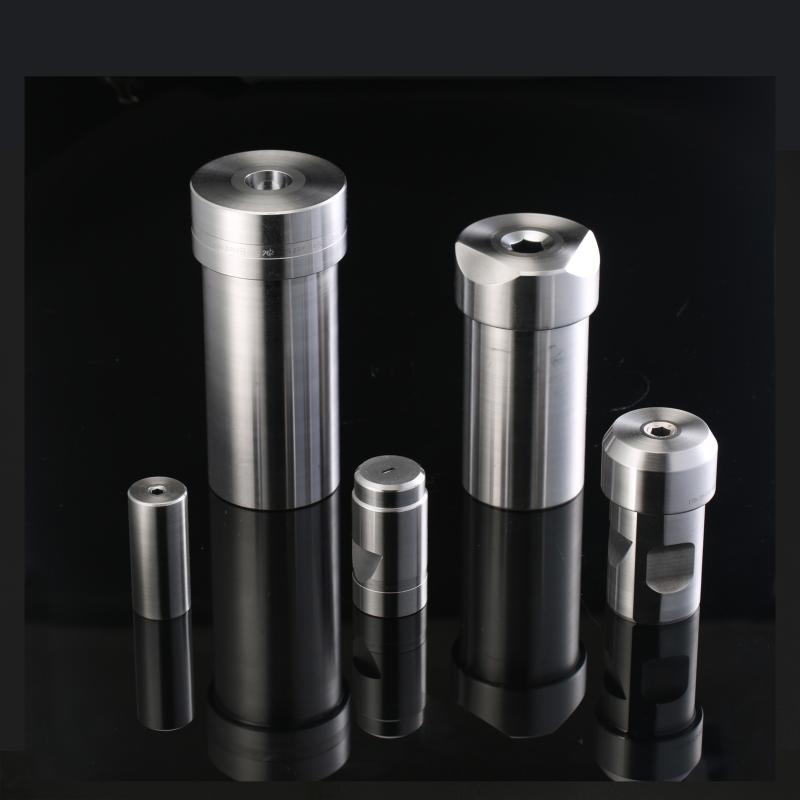
1. Match the Material to Your Production Volume
Punch dies are typically made from tool steel or Tungsten Carbide, and the right choice depends heavily on how many cycles the die needs to survive:
SKH-9 (M2), 61–64 HRC: a solid general-purpose option for Cold Forging Dies, punches, and flat dies
SKH-55 (M35), 63–66 HRC: a step up for advanced screw dies requiring higher hardness
ASP-30 (M42), 66–68 HRC: powdered high-speed steel for high-heavy-load dies and hollow rivet punches
Tungsten Carbide: the top tier for extreme wear resistance in very high-volume, continuous production
For lower-volume or prototype runs, standard tool steels are usually cost-effective. For high-frequency, high-volume stamping, moving up to carbide or high-speed steel pays off through reduced replacement frequency.
2. Choose the Right Surface Coating
A coating adds a hard, low-friction layer on top of the base material, and different coatings suit different working conditions:
TiN (gold, Hv2000): good general wear resistance, rated up to 550°C
TiCN (gray, Hv3000): improved hardness over TiN, rated up to 400°C
TiAlN (dark purple, Hv3000–5000): the best high-temperature performer among common coatings, rated up to 850–1000°C
CrN (silver, Hv1800): good corrosion resistance, rated up to 700°C
ALCRONA (dark purple, Hv3200): the highest temperature tolerance at up to 1100°C
If your stamping process generates significant heat from friction or high-speed cycling, prioritize a coating with a higher max working temperature rather than defaulting to the most common option.
3. Confirm Tolerance and Precision Requirements
Precision punch dies can be manufactured to tolerances as tight as ±0.002mm, with hardness ranging from HRC 60 to 94 depending on material. Before ordering, be clear on what your application actually requires — over-specifying tolerance drives up cost without adding value, while under-specifying it risks scrap parts and inconsistent hole quality.
4. Match the Die Type to Your Stamping Complexity
Simple dies: single-operation cutting or punching
Composite dies: multiple operations performed in a single press stroke
Continuous dies: progressive operations across multiple stations for complex parts
Multi-station dies: high-volume production requiring several forming steps in sequence
Matching die complexity to your actual part design avoids paying for capability you don't need — or under-building a die that can't keep up with your production requirements.
Not sure which material and coating combination fits your stamping process? Send us your part drawing and production volume, and we'll recommend the right spec within 24 hours.
5. Consider Maintenance Requirements
Even a well-specified die needs regular cleaning, lubrication, and inspection to reach its full service life — high-quality dies can withstand tens of thousands to millions of stamping cycles when properly maintained, but neglecting maintenance shortens that significantly. Factor ongoing maintenance capability into your decision, not just the upfront material and coating choice.
6. Why Choose Us for Custom Punch Dies
Material options including SKD11, SKD61, HSS, A2, M2, D2, SUJ2, S45C, and tungsten carbide
Coating options including TiN, TiCN, TiAlN, CrN, nitriding, and black oxide
Precision tolerance to ±0.002mm, hardness up to HRC 94
27 years of experience manufacturing dies for automotive, electronics, appliance, and aerospace applications
Custom material, size, shape, coating, and marking to your exact drawings
Choosing the right punch die comes down to matching material, coating, and tolerance to your actual production volume and working conditions — not defaulting to whatever's standard. If you're not sure which combination fits your application, send us your specs and we'll help you get it right the first time.