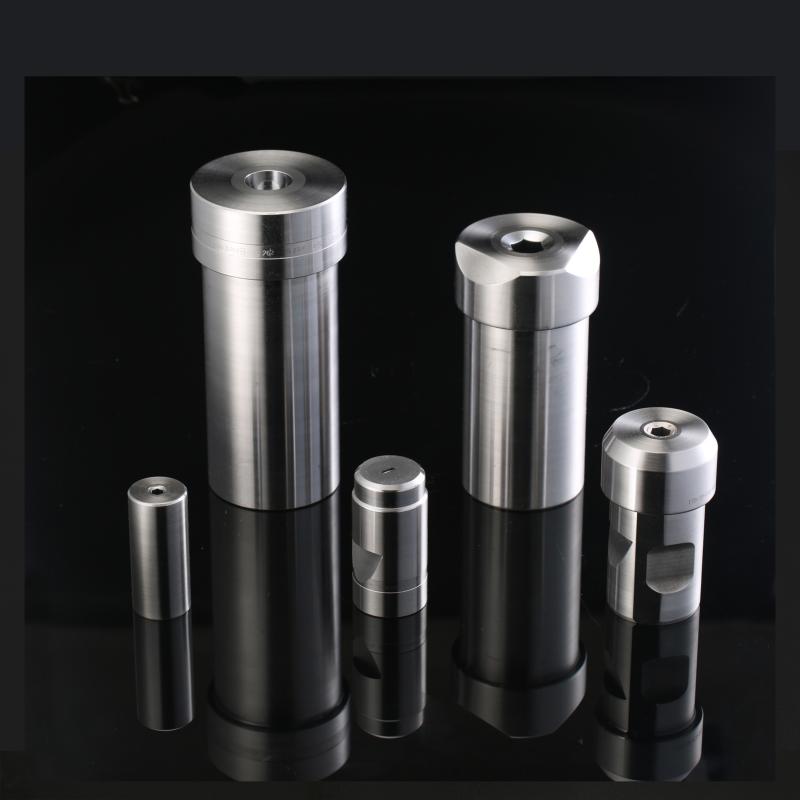
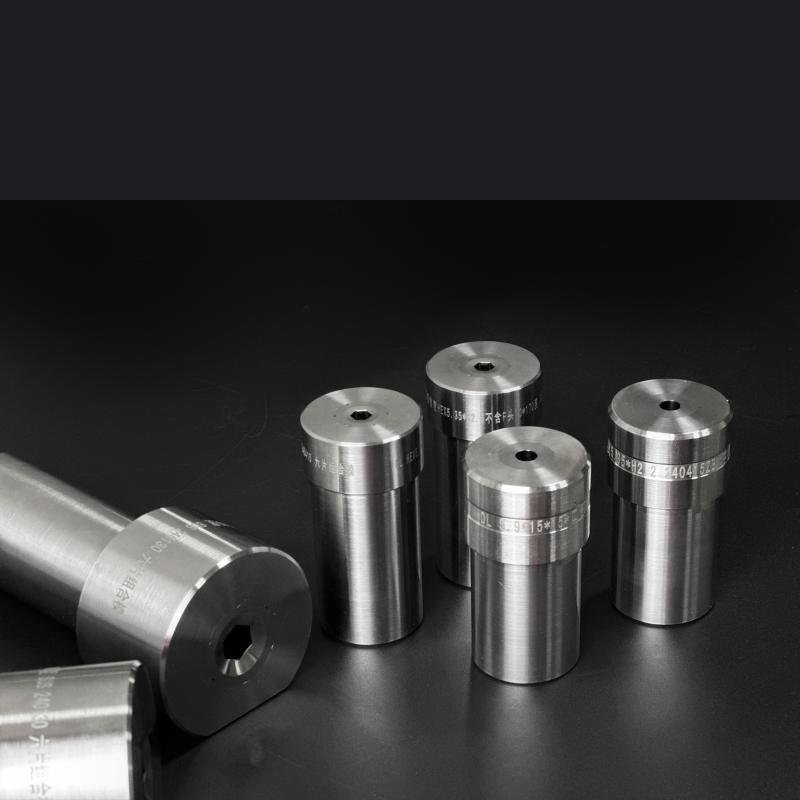
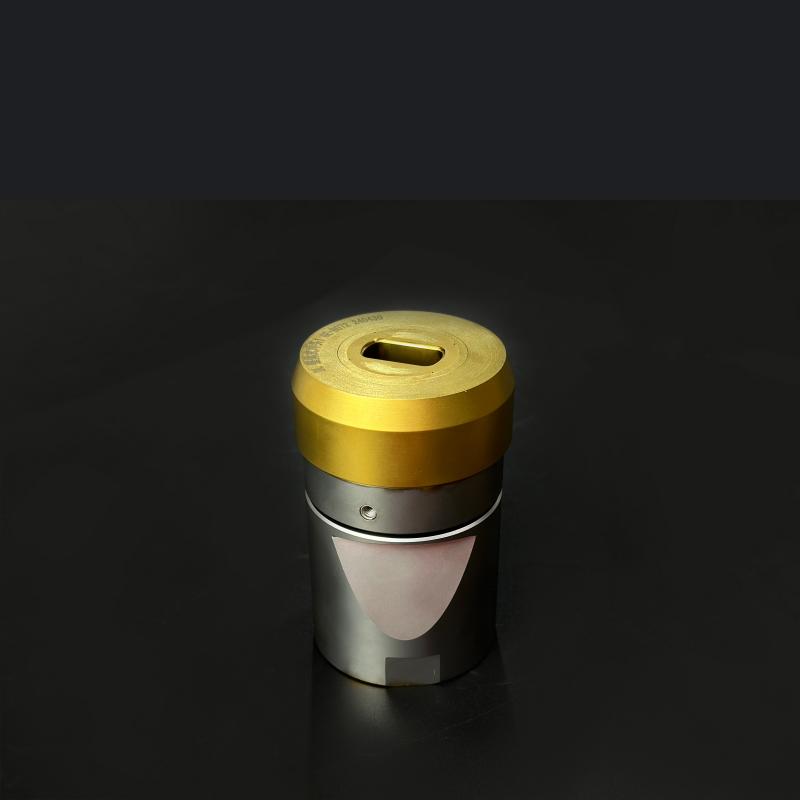
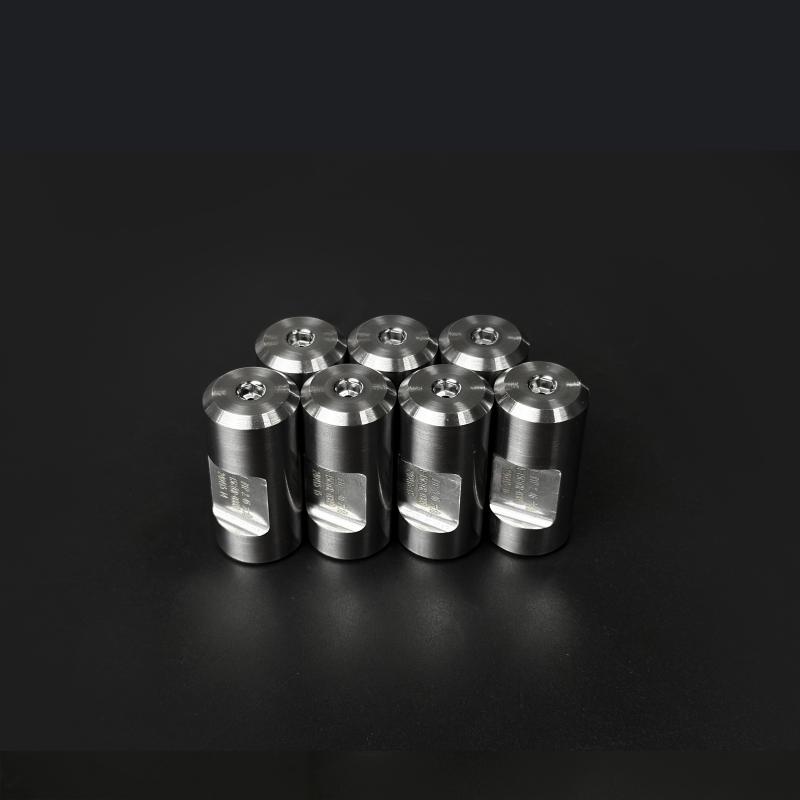
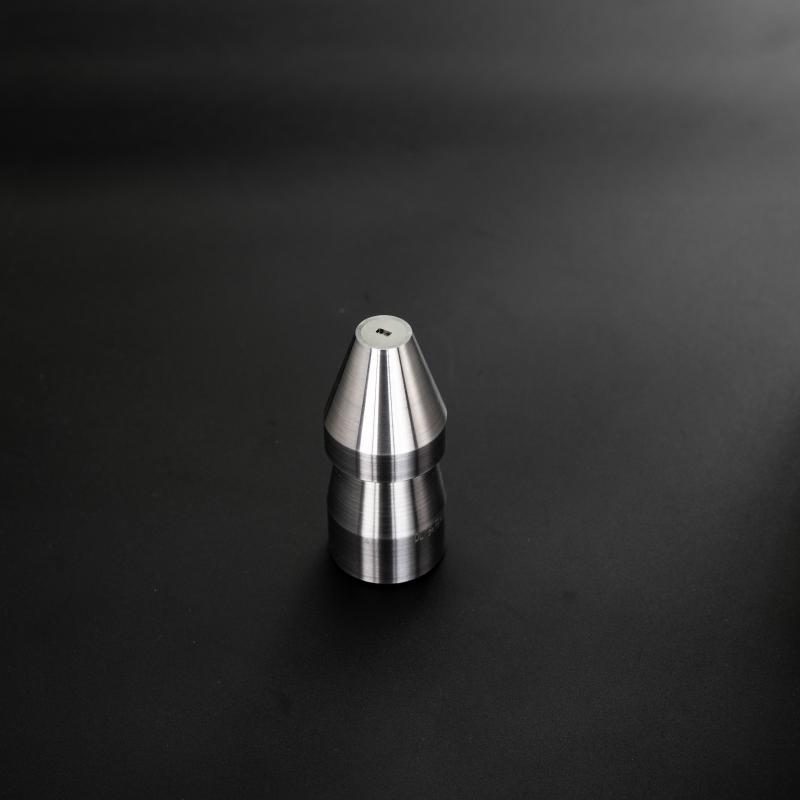
Punch Dies Product Information | |
Product Name | Punch Dies |
Brand Name | Donglong |
Place of Origin | Dongguan, Guangdong, China |
Specification | Customized on Request |
Customization | Material, size, shape, convex and concave marking, coating, laser engraving mark and packing are all customizable. |
Product Material | Carbide.ASP23 Vanadis.CPMRTXM4.SKD11SKD61HSSA2M2D2SUJ2.S45C.ect |
Standard | DIN ANSI BS JIS |
Tolerance | ±0.002mm |
Surface Treatment | TiCNTiN,Aitain,Ticrnnitriding Black oxygened Black coating etc available |
Polishness | Close to Ra0.2 Hardness Depends on material(HRC60~94) |
Hardness | Depends on material(HRC60~94) |
Shaping Mode | Grinding, wire cutting, EDM, cnc machining, cnc turning, cnc Milling |
Application | Machinery Parts and Molds |
<td colspan="1" rowspan="1" style="box-sizing: border-box; outline: 0px; margin: 0px auto; padding-top: 6px; padding-bottom: 6px; font-size: unset; border-color: rgba(0, 0, 0, 0.086); overflow-wrap: break-word; border-width: 1px; border-style: solid
Material for Core of Punch Dies | ||||||
Grade | WC+Other | Co | Grain Size | Density | Hardness | TRS |
(±0.5%) | (±0.5%) | (g/cm³) | (HRA)±0.5 | (N/mm²) | ||
KG5 | 88 | 12 | Medium | 14.31 | 88.3 | 340 |
KG6 | 86 | 14 | Medium | 14.12 | 87.3 | 320 |
EA65 | 82 | 18 | Coarse | 13.75 | 85 | 300 |
EA90 | 76 | 24 | Coarse | 13.22 | 82.8 | 270 |
ST6 | 85 | 15 | Coarse | 13.8 | 86 | |
Punch Dies are precision tooling components used in metal forming processes to apply pressure to a workpiece and create the required shape or profile. They are widely used in cold heading, fastener manufacturing, metal forming, extrusion, and other precision forming applications.
With accurate geometry, high hardness, and good wear resistance, Punch Dies are designed to withstand repeated forming pressure and impact. They can be manufactured according to the workpiece shape, machine requirements, material specifications, and production conditions.
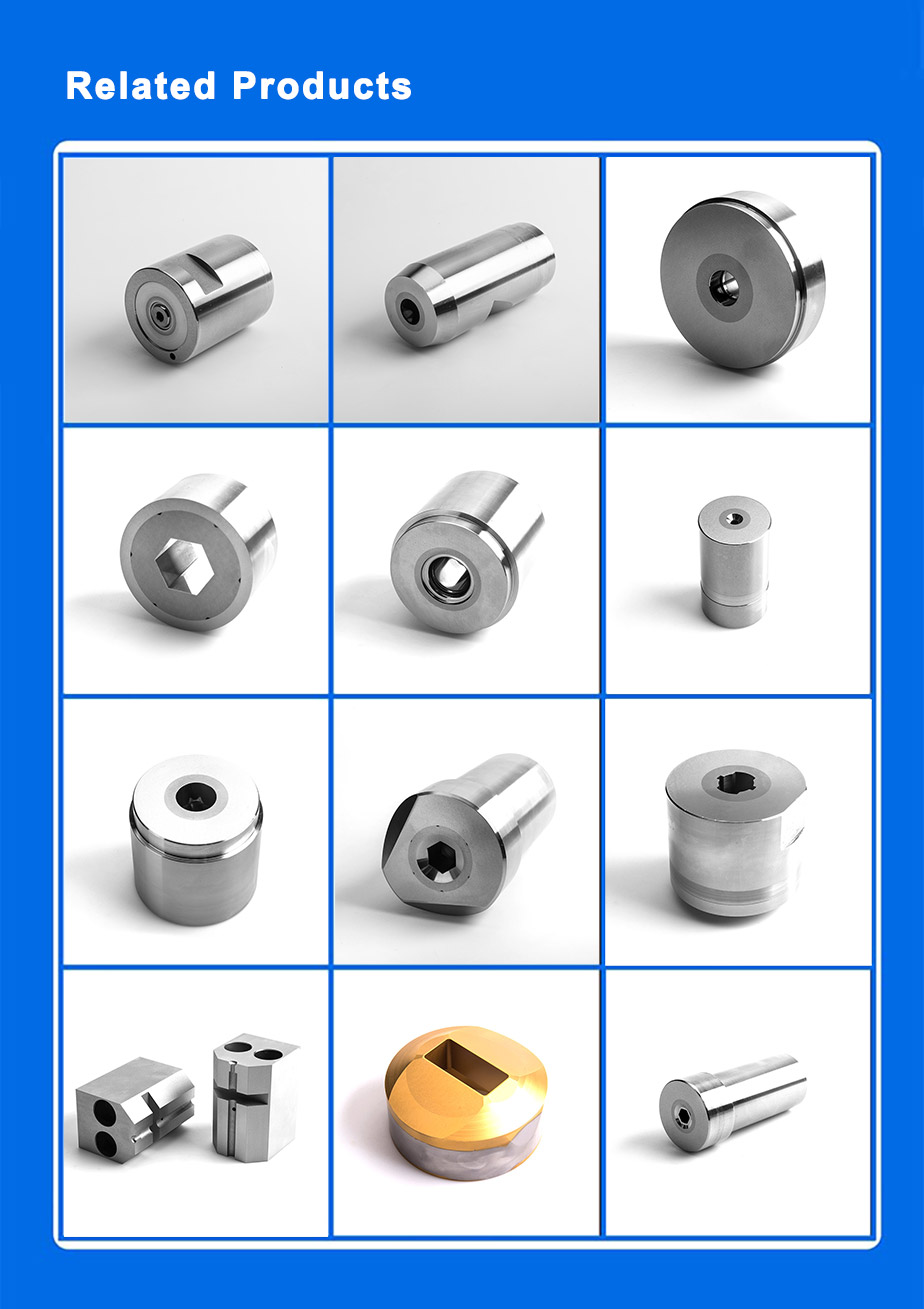
Punch Dies are tooling components used together with forming dies to shape metal materials during manufacturing. In a typical forming process, the punch applies force to the workpiece while the die supports or contains the material and controls its final geometry.
For fastener production, Cold Heading Punches are commonly used to form the head, recess, or other features of screws, bolts, rivets, and similar components.
Precise forming geometry
High hardness and wear resistance
Good resistance to repeated impact
Stable dimensional accuracy
Suitable for high-volume production
Customized profiles and dimensions
Available for different metal forming applications
Cold Heading Punches are important tooling components in the production of screws, bolts, rivets, and other fasteners. During cold heading, metal wire or billets are formed at room temperature under high pressure.
The punch transfers forming force to the workpiece and helps create the required head shape or other features. Accurate punch geometry is important for maintaining consistent dimensions throughout production.
Cold heading punches can be used for:
Screw manufacturing
Bolt manufacturing
Rivet production
Fastener forming
Heading operations
Extrusion operations
Precision metal forming
The punch design can be customized according to the fastener geometry and forming process.
Carbide Punch Dies are manufactured using cemented carbide or other suitable carbide materials for applications requiring high wear resistance and compressive strength.
Carbide tooling is suitable for demanding forming operations where the punch is exposed to repeated pressure, friction, and impact. The appropriate carbide grade can be selected according to the workpiece material, forming conditions, and production requirements.
Tungsten Carbide Punches provide a hard and wear-resistant working surface for precision metal forming. They can be used in applications where maintaining the punch profile and dimensional accuracy during repeated production is important.
Tungsten Carbide tooling is commonly considered for high-volume fastener production and other demanding forming applications.
Fastener Dies and punch tooling work together to form metal materials into the required fastener geometry. During the manufacturing process, the punch and die must be properly matched to achieve stable forming results.
Punch Dies can be designed for different fastener shapes and forming stages, including:
Screw head forming
Bolt head forming
Rivet forming
Upsetting
Forward extrusion
Backward extrusion
Precision forming
The specific punch geometry depends on the product design, material, forming equipment, and production process.
Different forming applications require different punch profiles, dimensions, materials, and tolerances. Customized Punch Dies can therefore be manufactured according to technical drawings, samples, or specific production requirements.
Selecting suitable Punch Dies requires consideration of the workpiece material, product geometry, forming process, machine type, forming pressure, production volume, and required tolerances.
For Cold Heading Punches, the punch material and geometry should be matched to the fastener design and forming conditions. For high-volume production, wear resistance and dimensional stability are particularly important factors.
A customized punch design can help ensure compatibility with the forming machine and the corresponding die.
Precision Punch Dies require accurate machining, suitable tooling materials, and careful control of the forming profile and dimensions. Customized punch tooling can be manufactured according to drawings, samples, machine specifications, and application requirements.
Whether you need Cold Heading Punches, Carbide Punch Dies, Tungsten Carbide Punches, or Fastener Dies, customized tooling can be developed for different metal forming and fastener manufacturing applications.
For customized Punch Dies, provide your product drawings, samples, dimensions, or technical requirements for further evaluation.
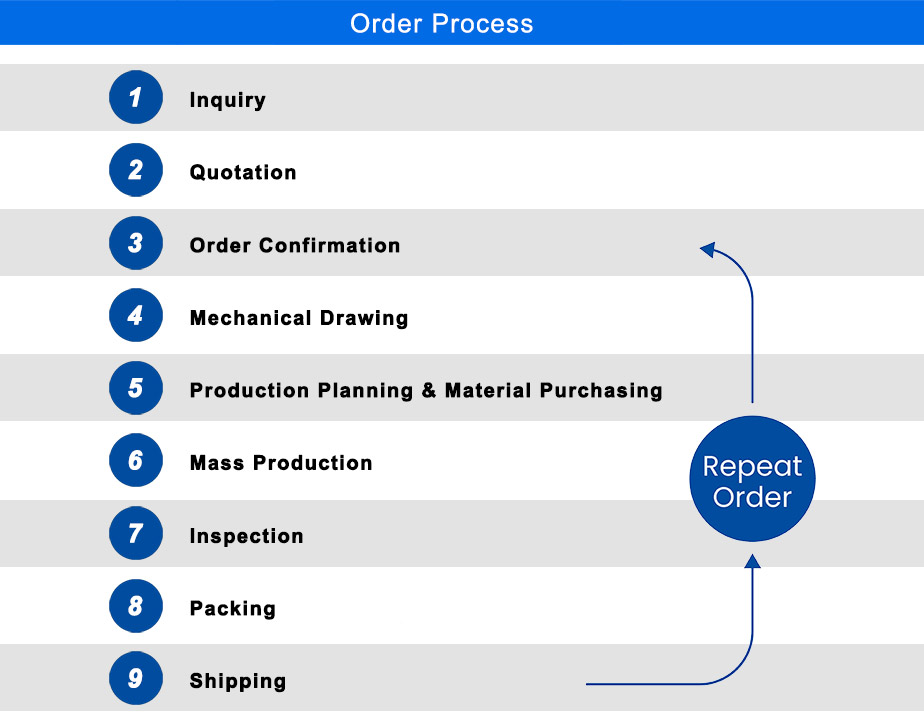

What are Punch Dies?
A punch die is a tool used for stamping, cutting, punching, and forming metal materials by mechanical or hydraulic pressure, and is widely used in manufacturing.
What are the main components of a Punch Dies?
A die usually consists of an upper die (Punch) and a lower die (Die). The upper die is used to apply pressure to cut or form the material, while the lower die provides support for the material and forms the desired shape or cut.
How does a punch work?
A die is punched, cut or formed by applying pressure from a punch press, which causes the upper die and lower die to move relative to each other, processing the material placed in the die.
What are the common types of dies?
There are various types of dies, including simple dies, composite dies, continuous dies, and multi-station dies, which are used for stamping tasks of varying complexity.
What are the common materials used for dies?
Dies are usually made of high hardness, high strength tool steel or tungsten carbide (tungsten carbide) to ensure wear resistance and long life for high frequency stamping operations.
How to maintain and care for punching dies?
Punching dies should be cleaned, lubricated and inspected regularly to avoid wear and corrosion. The edge of the die should also be regularly trimmed to ensure accurate cutting results.
What is the typical life of a die?
The lifespan of a die depends on the material it is made of, how often it is used and how well it is maintained. Typically, high-quality dies can withstand tens of thousands to millions of stamping operations.
What materials are dies used for?
Dies are suitable for processing a wide range of materials, including sheet metal (e.g., stainless steel, aluminum, copper), plastics, rubber, and composites.
How do dies affect machining accuracy?
The design and manufacturing accuracy of a die has a direct impact on the dimensional accuracy and surface quality of the machined part. A high precision die ensures consistent parts and reduces scrap.
In which industries are stamping dies widely used?
Punching dies are widely used in automotive manufacturing, electronic component production, appliance manufacturing, aerospace, and metal fabrication industries, where they are responsible for cutting, punching, and forming parts.
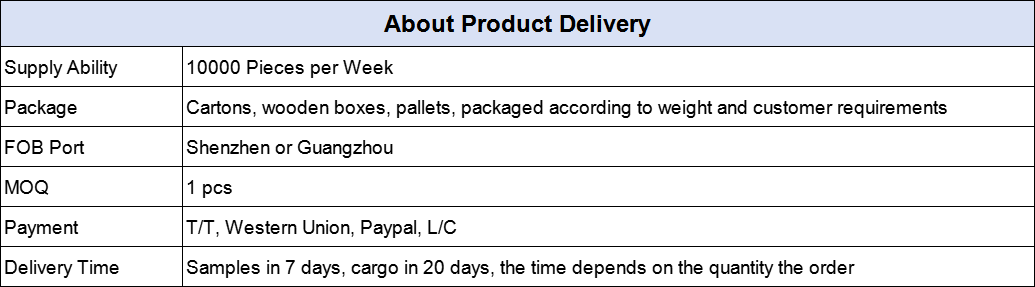

For 28 years, Donglong has been focusing on the design, development and manufacture of precision screw molds.


Copyright © 2026 Dongguan Donglong Mold All rights reserved. Privacy Policy